Sprinkler Backflow Testing Rules in Denton
If your Denton home has a sprinkler system, you have a backflow prevention assembly on the irrigation line, and the City of Denton expects it to be tested. Many homeowners only learn this when the first notice arrives. This guide explains what the device does, what the city requires and how the test works.
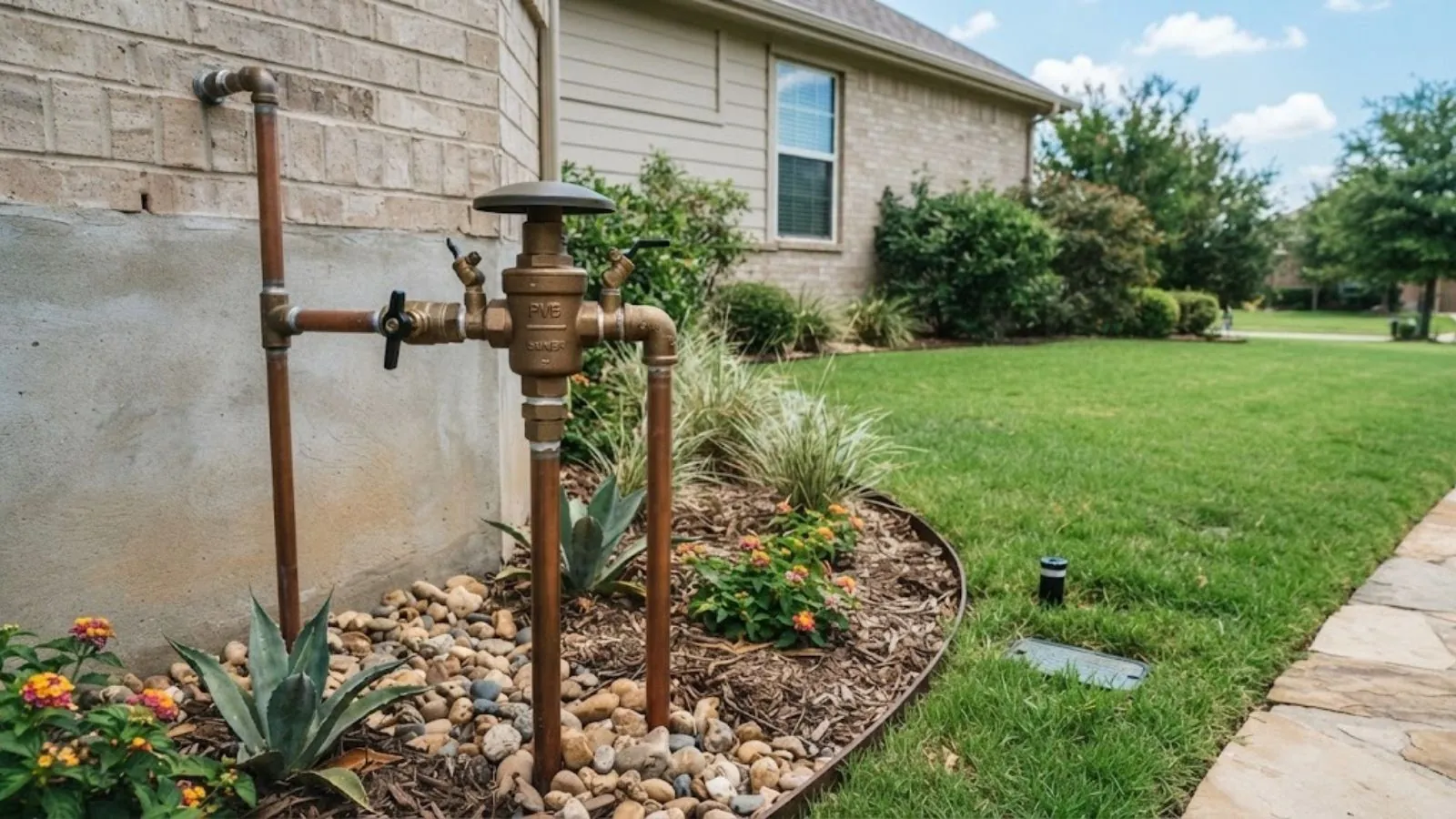
What a backflow assembly does
A backflow prevention assembly is a set of valves that lets water flow one way only, from the city system into your irrigation lines. It stops water that has been sitting in sprinkler pipes, where it can pick up fertilizer, pesticides and soil bacteria, from being drawn back into the drinking water supply.
Backflow can happen when pressure in the city main drops, for example during a water main break or heavy firefighting nearby. Without protection, that pressure drop could siphon water from your yard back toward the street.
Everyday fixtures have built-in protection too. Toilet fill valves, dishwasher air gaps and faucet spouts that sit above the rim of the sink all prevent backflow in simpler ways.
What the City of Denton requires
According to the City of Denton's Backflow Prevention and Cross-Connection Control Program, backflow assemblies need testing at least once a year because their mechanical parts can wear or fail. The city notes that homes with irrigation systems have at least one testable assembly on the irrigation line.
The program is large. The city says it tracks yearly testing on more than 6,500 commercial assemblies, and hospitals alone can have more than a hundred.
The rules sit in Chapter 26 of the City of Denton Code of Ordinances, in its cross-connection control and backflow prevention article, alongside the city's adopted plumbing code. The City Council adopted an updated ordinance on March 24, 2026. If your notice looks different from past years, that may be why. Check the city's program page for the current details.
How the test works
A standard residential test is quick.
- A licensed tester finds the assembly, usually near the meter or where the irrigation line branches from the house supply.
- Water to the irrigation system is shut off briefly.
- A calibrated differential pressure gauge is connected to the test cocks on the assembly.
- Each check valve, and the relief valve on some types, is tested against required pressure differences.
- The tester records the results and submits them through the reporting system the city uses.
- If the assembly fails, the tester explains which part failed and what the repair involves.
In Texas, backflow prevention assembly testers are licensed through the Texas Commission on Environmental Quality.
Common assembly types on Denton properties
Your type determines how it is tested and what tends to fail.
| Type | Where it is found | Common failure | Freeze risk |
|---|---|---|---|
| Pressure vacuum breaker (PVB). | Residential irrigation, above ground. | Worn seals, stuck poppet. | High if left full. |
| Double check valve assembly. | Irrigation and some commercial lines, often in a box. | Debris on check valve seats. | Lower when buried. |
| Reduced pressure zone (RPZ). | Higher-hazard commercial lines. | Relief valve discharging. | High if exposed. |
What to do before the tester arrives
A little preparation keeps the visit short.
- Have the city notice ready. It lists the assembly and the reporting details.
- Clear access. Trim plants, move mulch and open any locked gate.
- Turn off the irrigation controller so a zone does not start mid-test.
- Let the household know water will be off briefly.
- Mention past repairs or freeze damage so the tester knows what to check.
Preventing failures and freeze damage
Above-ground pressure vacuum breakers are the most common residential type and the most exposed to freezes. Water trapped inside can crack the body or bonnet during a hard North Texas freeze.
Before a forecast freeze, shut off the irrigation supply and drain the assembly, or fit an insulated cover. After the freeze, check for cracks or leaks before turning the system back on.
Outdoor faucets need backflow protection too. A hose bib vacuum breaker, or a frost-free sillcock with one built in, keeps garden hose water from siphoning back into the house. Our outdoor faucet repair page covers those upgrades, and the backflow testing page covers testing and repair.
What to do after the test
A passed test is a good moment to check the rest of the irrigation system.
- Keep the test report or confirmation for your records.
- Run each zone and look for broken heads, geysers or soggy spots.
- Check the valve box for standing water, which can point to a leaking valve.
- Adjust heads so they water plants and lawn, not the driveway or the foundation edge.
- Set the controller to the City of Denton's current watering schedule, which changes with drought stage.
- Note the next test date on your calendar.
Irrigation leaks are one of the most common causes of unexplained high water bills in Denton, so a walk-through after the test often pays for itself.
Larger lots, more assemblies
Properties with large irrigation systems, pools with auto-fill lines, or outbuildings may have more than one assembly. Acreage homes around Argyle are a common example. Each assembly on the provider's list needs its own test.
Towns outside Denton run their own backflow programs through their water providers, with their own notices and deadlines. The testing method is the same, but follow the notice from your own provider.
Backflow testing questions
Missed tests do not just disappear. Denton's cross-connection ordinance lets the city pursue overdue assemblies, and water service can hinge on it. Pick a tester early rather than waiting for a second letter.
A new or relocated assembly is typically tested when it is installed, and moving or removing one generally needs the city's approval. Ask the city before changing anything on the irrigation line, and keep the installer's test report.
A partly failed or debris-clogged assembly can restrict flow. If several zones lose pressure at once, have the assembly checked along with the main valve and the controller.
Usually well under an hour for a single irrigation assembly, longer if repairs are needed.
No. Testing requires a licensed tester and a calibrated gauge, and results must be submitted by the tester.
No. It only stops water from flowing backward into the drinking supply. Leaks in heads, lines or valves downstream of it are separate problems, and they still run up the water bill.
Most failures are fixed with a repair kit for the worn seals or check valves, followed by a retest. Cracked bodies from freeze damage need a new assembly.
Denton Apex Plumbing coverage map
Coverage map for Denton and the nearby Denton County towns we serve.
Need a plumber for this?
Call the 24/7 line for Denton and nearby towns. Describe what you are seeing.
Call (940) 229-7314