Slab Leak Detection & Repair in Denton, TX
Concrete foundations on Denton clay carry copper or PEX lines locked inside them, and those lines crack when the slab flexes. Slab leak detection and repair in Denton, TX starts by isolating hot from cold, traces the run through the concrete, then lays out the honest options: a spot repair, a reroute or a repipe.
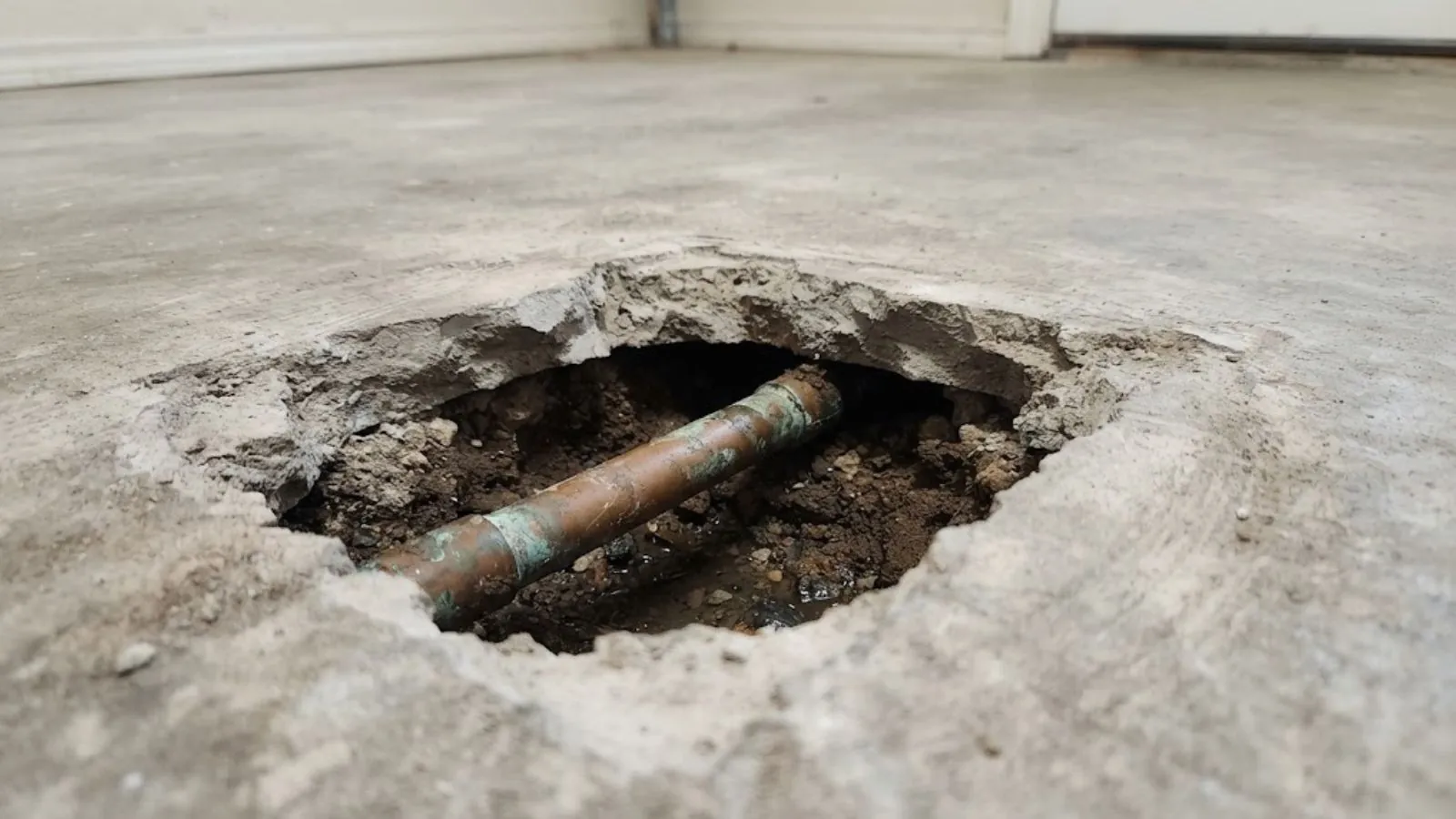
Warm floor, hissing wall or a bill that keeps climbing?
Nobody sees a slab leak directly. People notice what it does. These are the signs Denton homeowners describe most often.
- A warm or hot spot on a tile or concrete floor. That usually means a hot-water line is leaking underneath.
- The sound of running water with every fixture off. It is often loudest near a wall or in a closet.
- A meter dial that never rests. The utility gauge spins even with sprinklers and faucets shut.
- New cracks, loose baseboards or soggy carpet. Nothing overhead explains them.
- A water heater that runs constantly. It keeps reheating water that is leaking away.
Any one of these is worth a meter test. Two or more together are worth a call. If water is surfacing through the floor, the line is open 24/7.
Why slab leaks are common in Denton
A slab leak is a leak in a water line that runs beneath or inside a home's concrete foundation. In this part of Texas, the ground itself is a big part of the cause.
Denton sits where the dark, expansive clay of the Blackland Prairie meets the Cross Timbers. That clay swells after heavy rain and shrinks during dry stretches. The slab moves with it, and pipes locked in concrete cannot move freely. Over years, that stress opens pinholes and cracks fittings.
Dry summers make it worse. In 2024 the city spent August 20 to October 8 under Stage 2 drought rules after filter damage at the Lake Lewisville treatment plant, with limits on foundation watering. Uneven drying around a slab is exactly the kind of movement that stresses buried lines. If floors or drywall cracked that fall, it is worth a meter test now.
Pipe material adds to it. Many older homes have copper under the slab, which can pit over decades. Newer homes often use PEX, which handles movement better but can still fail at fittings.
How a slab leak gets pinpointed
Confirming the leak comes first. The hot and cold sides are isolated and pressure-tested separately with a gauge, which shows which system is losing water.
Next, the line is traced. An electronic locator follows the pipe's path through the slab, since the actual route rarely matches what anyone remembers.
Then the spot is found. Acoustic ground microphones pick up the hiss of escaping water through concrete. On hot-side leaks, a thermal camera shows the warm bloom on the floor surface. The two methods together usually narrow the leak to a small area.
This is the same staged method used for any hidden leak detection job. The difference is that under a slab, the stakes of guessing wrong are a lot higher.
Repair options, side by side
Once the leak is pinpointed, there are three realistic paths. The right one depends on the pipe's age and how many leaks the house has had.
| Option | What it involves | Best when | Trade-off |
|---|---|---|---|
| Spot repair through the slab. | Cut a small opening in the floor, repair the section, patch the concrete. | One leak in otherwise sound pipe. | Flooring over the spot must be lifted. Other old sections may fail later. |
| Reroute the line. | Abandon the leaking run and run new pipe through walls or the attic. | Pipe under the slab is aging or hard to reach. | Some drywall work. Attic lines need insulation against heat and freezes. |
| Repipe the house. | Replace the supply plumbing throughout. | Repeated leaks or failing original pipe. | Largest upfront cost, but ends the cycle. |
Reroutes and repipes in Denton are done to the 2021 International Plumbing Code (IPC), usually with PEX tubing made to the ASTM F876 standard. When the whole system is at fault, whole-home repiping is often the more economical long-term choice.
What slab leak repair costs depend on
These are the factors that decide the final number.
- How quickly the leak is pinpointed. A clean hot-side leak is faster to find than a small cold-side pinhole.
- Floor covering. Lifting and replacing tile or hardwood above the leak adds cost.
- Repair path. Spot repair, reroute and repipe differ widely in labor and material.
- Foundation condition. If the slab itself has moved, a foundation specialist may need to be involved.
- Permits. Larger reroutes and repipes may need a City of Denton plumbing permit and inspection.
Many homeowner policies cover the cost of breaking and restoring the floor to reach a sudden leak, even when they will not pay for the pipe repair. Ask your insurer before work begins.
Slab leak questions
It can. Water leaking under a slab can soften or wash out the soil beneath it, and in expansive clay it can make one section swell more than another. That is one reason not to wait on a confirmed slab leak.
Not always. A single leak in newer pipe is often cheapest to fix through the slab. If the pipe is old or has leaked before, rerouting avoids more trips through the floor. The plumber should show you the trade-off for your house.
No. Once the leak is pinpointed, the opening is usually about the size of a small access panel. Only the flooring above that spot needs to come up.
A spot repair is often done in a day, with extra time for concrete to cure before flooring goes back down. A reroute can take a day or two. A full repipe takes longer, depending on the size of the house.
Yes. Newer subdivisions around Aubrey and the other towns in the service area are covered by the same line.
Usually not. Find and stop the leak first, since a foundation repair on top of an active leak will not hold. If the slab has moved, a foundation specialist can assess it once the plumbing is fixed.
Denton Apex Plumbing coverage map
Coverage map for Denton and the nearby Denton County towns we serve.
Warm floor or a meter that never stops?
Slab leak detection and repair across Denton, TX. If water is coming up through the floor, call 24/7.
Call (940) 229-7314