Replacing Galvanized Pipe in Older Homes Near the Square
Many of Denton's older houses, including homes in the Oak-Hickory Historic District near the Courthouse-on-the-Square, were plumbed with galvanized steel supply pipe. Most of it is now well past its useful life and due for replacement. This guide explains how to tell if you have it and what to do about it.
What galvanized pipe is
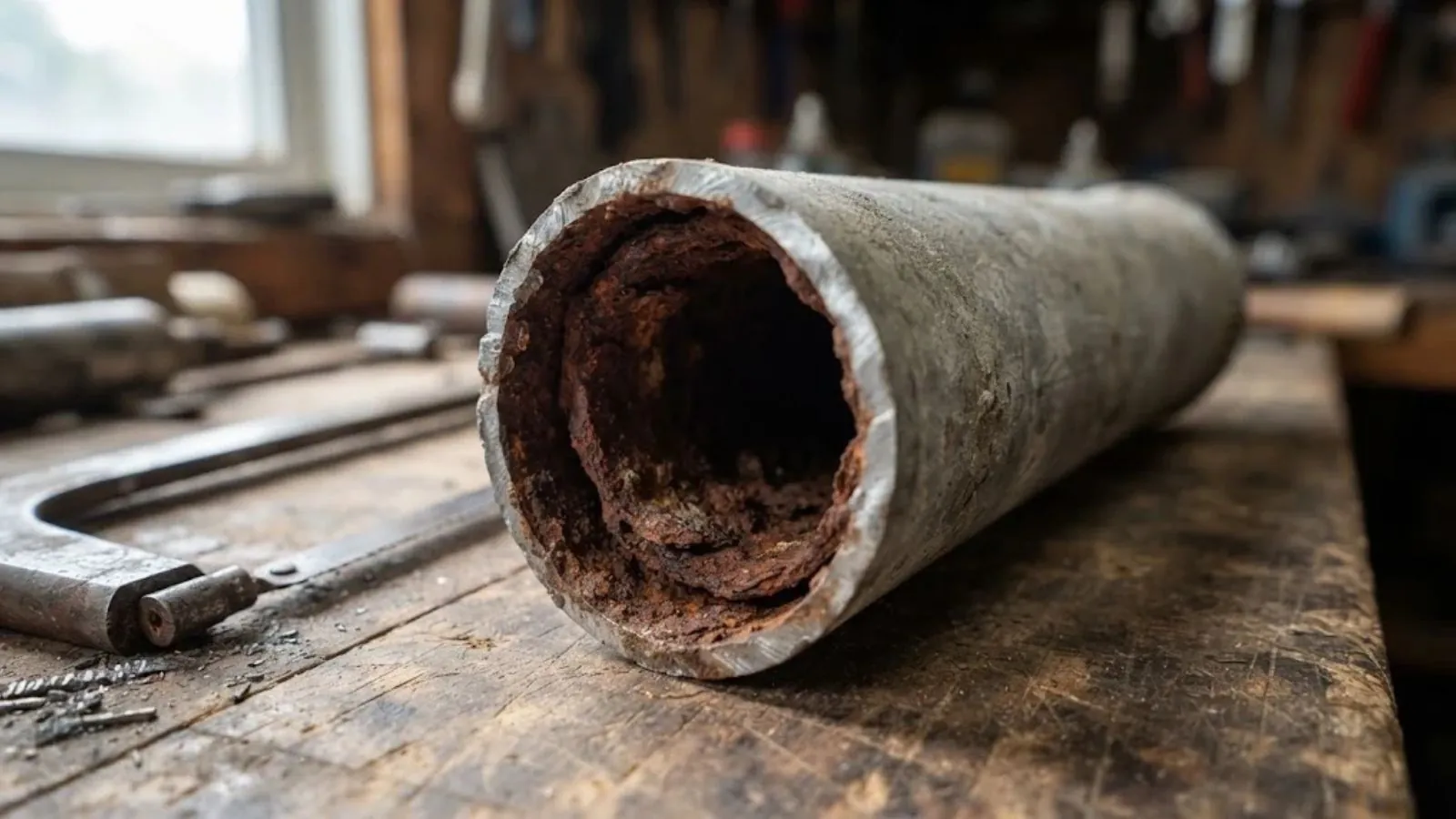
Galvanized pipe is steel pipe coated with zinc to slow rust. Builders used it for household water lines for decades before copper and plastic replaced it.
The zinc coating wears away from the inside over decades. Once it does, the steel rusts. Rust and mineral deposits build up on the inner wall, narrowing the pipe, and the pipe eventually weakens enough to leak, usually at the threaded joints where the wall is thinnest.
Galvanized pipe is not a sudden hazard. It is a slow decline that ends in low pressure, discolored water and leaks.
How to tell if you have galvanized pipe
You can usually tell in a few minutes.
- Look at the pipes where they enter the water heater, under sinks and at the main shutoff.
- Galvanized pipe is dull gray and has threaded joints. Copper is reddish brown. PEX and CPVC are plastic.
- Scratch a small spot with a coin or key. Galvanized shows silver-gray steel.
- Hold a magnet to it. A magnet sticks to galvanized steel but not to copper or plastic.
- Check more than one spot. Many older homes have a mix, with some sections already replaced.
Signs it is failing
Any one of these is a reason to plan. Several together usually mean it is time.
- Low water pressure at several fixtures, especially upstairs or far from the main.
- Brown or rusty water after the house sits unused, which clears after running.
- Uneven pressure, such as a shower that drops when a toilet flushes.
- Leaks at threaded joints, or rust stains around fittings.
- Sediment in faucet aerators that returns soon after cleaning.
Replace now or plan for later?
Not every galvanized system needs to come out this month.
| Situation | Reasonable approach |
|---|---|
| Pressure fine, water clear, no leaks. | Plan and budget. Get a repipe estimate for the future. |
| Low pressure at one or two fixtures. | Replace those runs, then watch the rest. |
| Brown water and dropping pressure. | Price a full repipe. |
| Leaks at joints in more than one place. | Repipe. Spot repairs will keep coming. |
| Buying or selling the house. | Get the pipe identified during inspection. |
Why older Denton homes are affected
Many homes near downtown and the UNT and TWU campuses were plumbed before copper and plastic became standard.
Some have been updated over the years, often piecemeal. That leaves houses with a patchwork: new PEX to a remodeled bathroom, original galvanized everywhere else. A patchwork system can hide the problem, because the updated fixtures work fine while the old runs keep deteriorating.
Older drains in the same homes are often cast iron, which corrodes in a similar way. A drain camera can show its condition during the same visit.
What a repipe involves
Most repipes in North Texas replace galvanized with PEX, a flexible plastic tubing made to the ASTM F876 standard. It bends around corners, so it needs fewer fittings and smaller wall openings than copper.
The plumber runs new lines from the main shutoff to each fixture, usually through the attic and down inside walls, and connects them. Old pipe is abandoned in place or removed where it is accessible. Small drywall openings are patched afterward.
Inside Denton city limits, the work follows the 2021 International Plumbing Code (IPC) and needs a permit and inspection before walls are closed. Many homes are done in a few days with water back on each evening. Our repiping page covers the process, and if a leak has already shown up, leak detection finds it first.
What a repipe estimate should include
Compare estimates on the same scope. A good one spells these out.
- Every fixture included: sinks, tubs, showers, toilets, the water heater, laundry, outdoor faucets and the ice maker line.
- Pipe material and size, such as PEX or copper, and whether a manifold or branch layout is used.
- New shutoff valves at each fixture, which make future repairs easier.
- Drywall openings and who patches them, including whether painting is included.
- Permit and inspection, and who schedules them.
- How many days the job takes and whether water is restored each evening.
- Warranty terms on labor and materials, in writing.
If an estimate leaves these vague, ask before you sign. Most surprises on repipe jobs come from what was not written down.
Homes in the Oak-Hickory district and similar older blocks
Older homes may have plaster walls, original trim or other features worth protecting. A good repipe plan routes lines through closets, cabinets and attics where possible to limit openings in finished walls.
Exterior changes in a historic district can need review, but interior plumbing usually does not. Check with the city if the job involves anything visible from the street.
Older homes in nearby towns share the same issue. Houses near the historic downtown in Sanger, for example, often have galvanized or cast iron in the original sections.
Galvanized pipe questions
Old galvanized pipe can release rust and, in some cases, lead that collected from older upstream materials. If you are concerned, test your water through a certified lab and run the tap before drinking after the house sits unused.
Yes, and many owners do. It spreads the cost, but it means more visits and more wall openings over time. A full repipe is usually more economical per foot.
If the cause is narrowed galvanized pipe, yes. If the cause is a failed pressure reducing valve or a city-side issue, the plumber should check those first.
Galvanized supply pipe was often expected to last several decades, and much of what remains in Denton homes is well past that. Condition matters more than age, though. A home with clear water, steady pressure and no leaks can reasonably plan a repipe over a year or two. A home with brown water and falling pressure should move sooner, because the inside of the pipe keeps narrowing and joints keep weakening.
Some ask about pipe material when writing or renewing a policy. A completed repipe with a permit record can help.
Denton Apex Plumbing coverage map
Coverage map for Denton and the nearby Denton County towns we serve.
Need a plumber for this?
Call the 24/7 line for Denton and nearby towns. Describe what you are seeing.
Call (940) 229-7314