Septic or City Sewer? Plumbing for Homes on Denton's Rural Edges
Drive a few miles out of Denton toward Krum, Ponder, Aubrey or Argyle and many homes are no longer on city sewer. They rely on septic systems in the yard. If you have recently moved from a city lot, the habits that work on city sewer can cause expensive trouble on septic. This guide covers the differences.
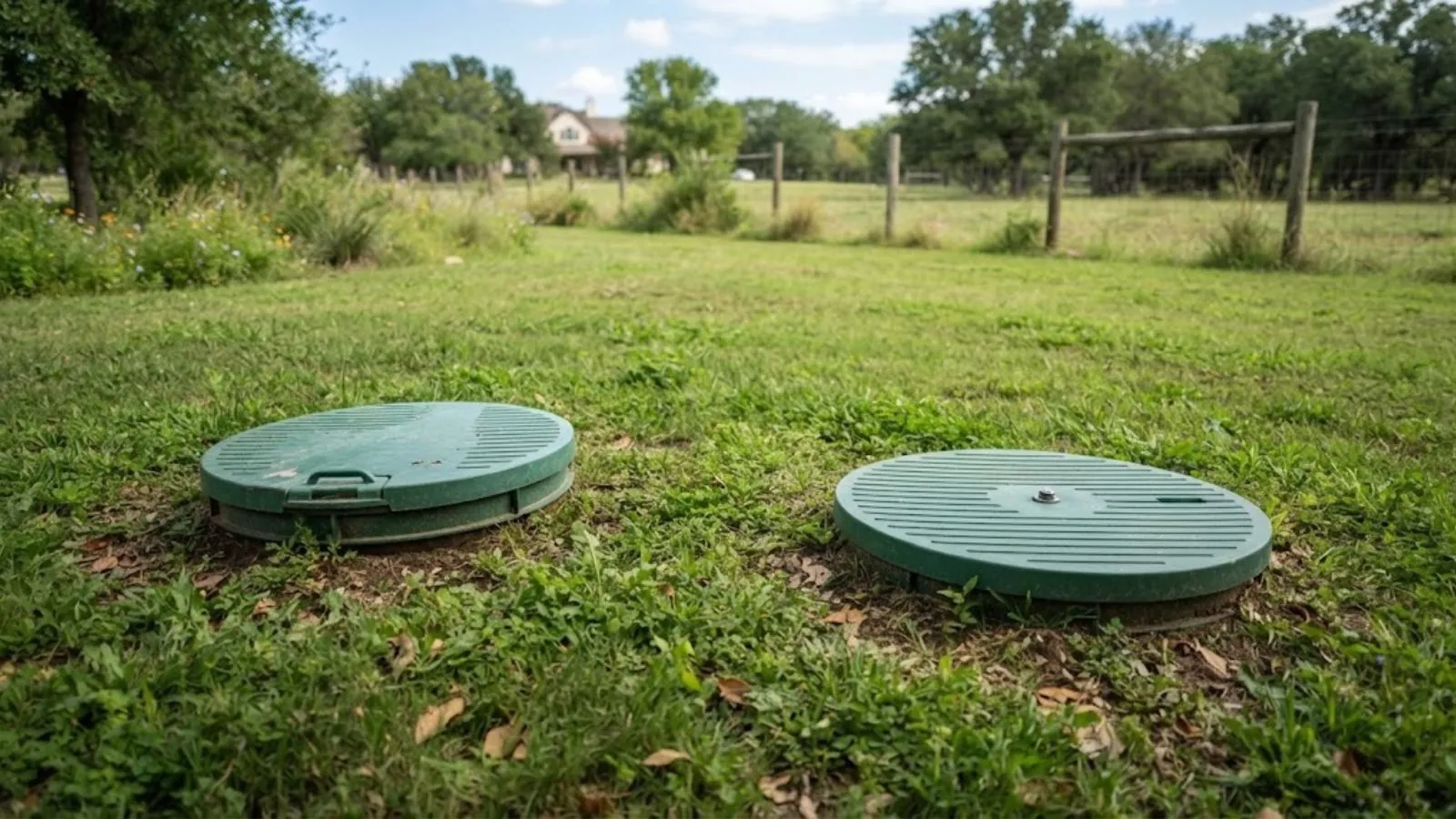
How the two systems differ
On city sewer, wastewater leaves the house through a lateral and joins a public main that carries it to a treatment plant. The city maintains the main, and the homeowner looks after the lateral.
On septic, the treatment happens on your property. Wastewater flows into a tank where solids settle and scum floats. The partly treated liquid then goes to a drain field or, in an aerobic system, through a treatment unit and out through spray heads or drip lines. The homeowner is responsible for all of it.
In Texas, on-site sewage facilities are regulated by the Texas Commission on Environmental Quality, often through a local authorized agent. New systems, major repairs and some maintenance arrangements fall under those rules.
Septic and city sewer side by side
The daily experience is similar. The upkeep is not.
| City sewer | Conventional septic | Aerobic septic | |
|---|---|---|---|
| Who maintains it. | City maintains the main. | Homeowner. | Homeowner, often with a service contract. |
| Routine upkeep. | Keep the lateral clear. | Pump the tank every few years. | Regular inspections, chlorine, pumping as needed. |
| Power needed. | No. | Usually no. | Yes, for aerators and pumps. |
| What to avoid. | Grease, wipes. | Grease, wipes, heavy disposal use, harsh chemicals. | Same, plus letting alarms go unanswered. |
| Monthly bill. | Wastewater charge. | None. | Service contract, if used. |
Warning signs of septic trouble
Catch these early and the fix is usually a pumping or a line cleaning. Ignore them and the drain field can fail.
- Slow drains throughout the house.
- Gurgling toilets or tubs after heavy water use.
- Sewage odor near the tank, the field or inside.
- Soggy ground or unusually green grass over the field in dry weather.
- Backups after heavy rain, when saturated clay cannot take more water.
- An aerobic system alarm that sounds or lights up.
What to do when drains back up on septic
Safety and diagnosis come first.
- Stop using water in the house.
- Check the aerobic system's alarm and breaker, if you have one.
- Keep people and pets away from any sewage outside or inside.
- If only one fixture is slow, it may be a simple house drain clog.
- If the whole house is slow, the tank may be full or the line to it blocked. Call a septic hauler to pump and a plumber to clear the line.
A plumber clears the house drains and the line to the tank. Our drain cleaning page covers that work. Pumping the tank itself is done by a licensed hauler.
Habits that protect a septic system
Pump on schedule. Many households pump every three to five years, depending on tank size and how many people live in the home. Waiting until the tank is overfull pushes solids into the field, which is the expensive part to replace.
Go easy on the garbage disposal. Ground food adds solids to the tank and shortens the time between pumpings. Many septic owners use the disposal lightly or not at all, which our garbage disposal page discusses.
Keep grease, wipes, paper towels and harsh chemicals out. Spread laundry across the week rather than doing it all in one day, so the field is not flooded at once. Keep vehicles and heavy equipment off the drain field.
Switching from septic to city sewer
As towns grow, city sewer sometimes reaches properties that were on septic. Switching involves a new lateral from the house to the sewer tap, tap and connection fees set by the city, and properly abandoning the old tank, which usually means pumping it and filling or removing it according to local rules.
The plumbing work follows the city's adopted plumbing code, which in most North Texas cities is based on the International Plumbing Code (IPC). The new lateral must slope correctly and pass inspection before backfill.
Whether to switch depends on the cost of connection versus the age and condition of your septic system. A system near the end of its life makes the switch more attractive. Rural homes around Krum are seeing this choice more often as the town grows.
What to do when an aerobic system alarm goes off
Aerobic systems use pumps and air compressors, and the alarm warns you when something stops working.
- Silence the alarm if the panel allows it, but do not ignore the cause.
- Check that the system's breaker has not tripped.
- Cut back water use in the house until the problem is found.
- Call your septic service provider, or the company named on the system's panel or contract.
- Do not open the tank lids yourself. Gases inside can be dangerous.
Buying a home on septic
If you are buying a rural property, ask for the septic system's permit history, the last pumping date and any service contract records. A septic inspection is separate from a standard home inspection and is worth ordering.
If the home uses an aerobic system, ask whether a maintenance contract is in place and when it renews, since many owners keep one for routine inspections.
Ask how far the drain field is from wells, the house and property lines, and whether any additions or pools were built over it. Structures over a drain field are a common source of problems.
Septic questions
Plumbers handle the house drains and the line to the tank. Tank pumping, aerobic system service and drain field work are usually done by licensed septic professionals.
Most experts say a healthy system does not need them. Regular pumping and good habits matter far more.
Saturated clay soil cannot absorb more water from the drain field, so effluent has nowhere to go. It usually improves as the ground dries, but repeated backups can mean the field is failing.
Keep trees and large shrubs well away from the field. Roots seek out the moisture in drain lines and can clog them. Grass is the best cover for a drain field.
Check the property's permit records, look for lids or risers in the yard, or follow the main drain line out from the house. A septic professional can locate it if needed.
Denton Apex Plumbing coverage map
Coverage map for Denton and the nearby Denton County towns we serve.
Need a plumber for this?
Call the 24/7 line for Denton and nearby towns. Describe what you are seeing.
Call (940) 229-7314