Slab Leak Warning Signs in Blackland Prairie Clay Homes
A slab leak rarely announces itself. The water goes into the soil under your house, and what you notice is indirect: a floor that feels warm, a bill that creeps up, a crack that was not there last month. This guide lists the signs Denton homeowners report most often, in the order they tend to appear.
Why slab leaks are hard to spot
Most homes in Denton sit on a concrete slab poured directly on the ground. Water supply lines either run through the slab or in the soil beneath it. When one of those lines leaks, the water has somewhere to go that is not your floor: the soil.
Denton's clay absorbs a lot of water before anything shows at the surface. That means a leak can run for weeks, sometimes longer, before the signs become obvious. By then the soil under part of the slab may have swollen, which moves the foundation and can cause more damage.
The signs below are worth taking seriously even when they seem small. Catching a leak early is the difference between a small opening in one floor and a much bigger repair.
The early signs
These tend to show up first, often before any visible water.
- A warm spot on the floor. Walk barefoot across tile or concrete. A patch that feels warmer than the rest often sits over a leaking hot-water line.
- Water running with everything off. A faint hiss in a wall, closet or bathroom when no fixture is on.
- A water heater that runs more than it should. If the tank keeps refilling a leak on the hot side, it cycles constantly.
- A higher water bill with no change in how you use water.
- A meter leak indicator that moves with every fixture closed.
The later signs
These usually mean the leak has been running for a while.
- Damp carpet or warped wood flooring with no leak above it.
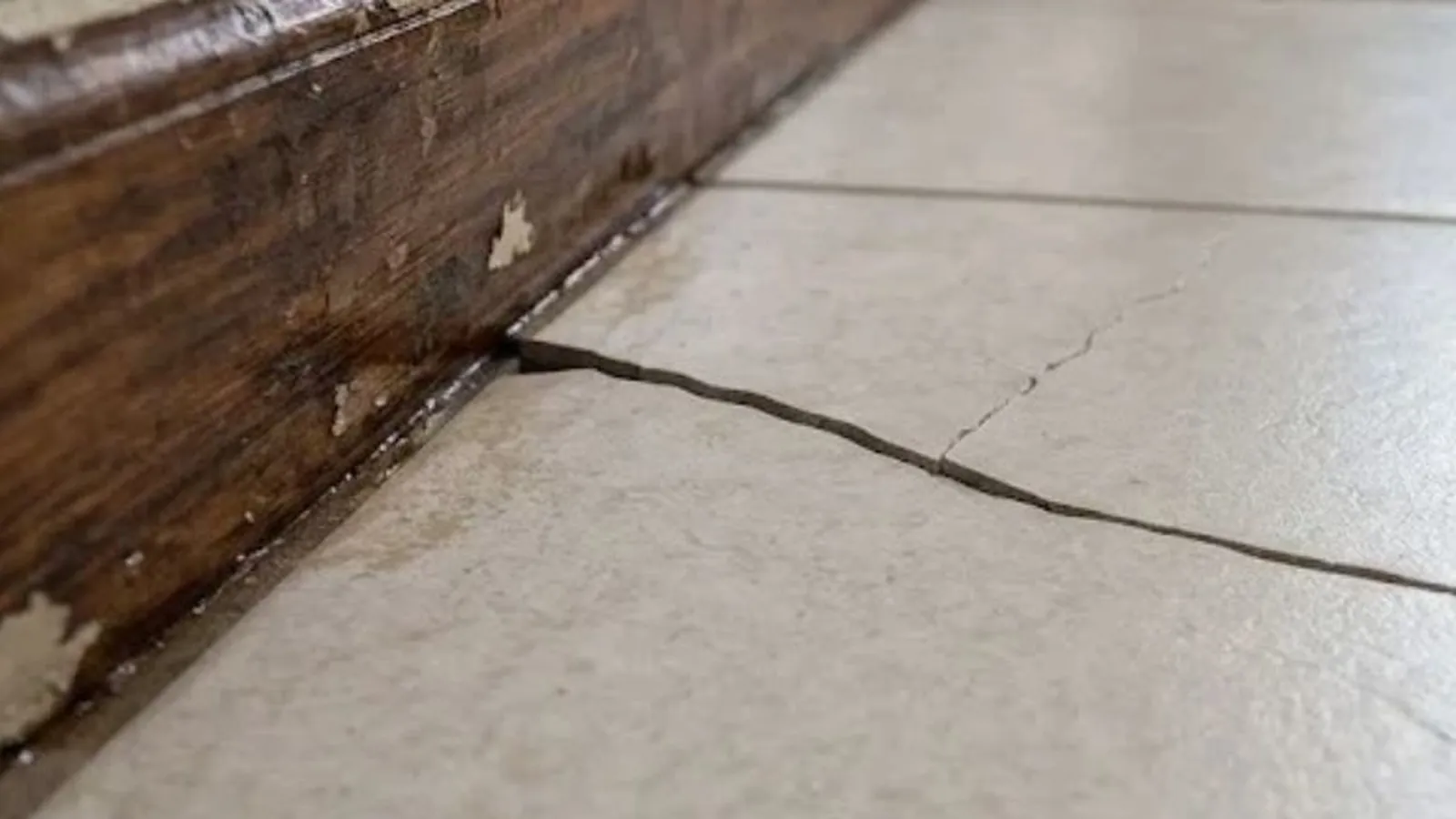
- Cracks in floor tile, often running in a line.
- Baseboards pulling away or swelling at the bottom.
- A musty smell or mildew near the floor.
- Water pooling outside along the foundation edge.
- New cracks in walls or doors that start sticking, from soil swelling under one part of the slab.
Slab leak or normal settling?
Denton houses move with the clay even without a leak. Here is how to tell the two apart.
| Clue | Points to a leak | Points to normal settling |
|---|---|---|
| Water meter. | Leak indicator moves with everything off. | Meter is still. |
| Floor temperature. | One warm patch. | Even temperature. |
| Timing. | Signs appear suddenly or worsen quickly. | Changes follow seasons, wet versus dry. |
| Moisture. | Damp flooring, musty smell. | Dry cracks only. |
| Sound. | Hissing or running water. | Silence. |
Why Denton gets more slab leaks than many places
Denton sits where the dark clay of the Blackland Prairie meets the sandier Cross Timbers. The clay side is highly expansive. It swells after rain and shrinks in dry spells, and a slab rides that movement.
Pipes locked in concrete cannot move with it. Copper lines, common under older slabs, can wear pinholes where they rub concrete or gravel. Fittings crack. Even newer PEX lines can fail at connections.
Long dry stretches make it worse. The summer of 2024, when the city limited foundation watering during its Stage 2 drought period, is the kind of season that shows up in slab leak calls months later.
What to do if you see the signs
Do these in order.
- Run the meter test: all fixtures off, check the leak indicator.
- Close the house shutoff and check again, to see whether the leak is inside or in the yard line.
- If you feel a warm spot, turn the water heater's cold supply valve off to see if the meter stops. That points to the hot side.
- Photograph any damage and note the date, for insurance.
- Call for leak detection before calling a foundation company. The leak has to be stopped before any foundation repair will hold.
What happens next
A plumber confirms the leak with pressure tests on the hot and cold sides, traces the line's path through the slab and pinpoints the spot with acoustic sensors or a thermal camera. That staged process is described on our leak detection page.
Once the spot is known, the choices are a spot repair through the floor, rerouting the line through the walls or attic, or repiping if the pipe is failing in many places. The trade-offs are laid out on our slab leak repair page.
Reroutes and repipes inside Denton are done to the 2021 International Plumbing Code (IPC) the City adopted in 2022, usually with PEX tubing made to the ASTM F876 standard, and they typically need a permit and inspection.
The same signs and steps apply to newer homes around Aubrey and other fast-growing towns nearby, where fresh fill under a new slab can settle during its first few dry summers.
Hot side or cold side: why it matters
Slab leaks on the hot-water side and the cold-water side behave differently, and knowing which one you have speeds up the repair.
A hot-side leak warms the concrete above it, which is why a warm patch of floor is such a useful clue. It also makes the water heater run more than usual, since the tank keeps reheating water that leaks away. Your gas or electric bill may creep up along with the water bill.
A cold-side leak gives no warm spot. It is usually found through the meter test, a hissing sound or damp flooring. Cold-side leaks often run longer before anyone notices, because the only early sign is on the water bill.
A quick way to tell the difference: close the cold supply valve on top of the water heater and watch the meter. If the leak indicator stops, the leak is on the hot side. If it keeps moving, the cold side or the yard line is the likely source.
Slab leak sign questions
Yes. Cold-side leaks do not create warm spots, so they are often found through the meter test, a hissing sound or damp flooring instead.
Weeks or longer, especially in clay that absorbs water before anything shows. That is why a rising water bill is often the first clue.
If water is surfacing through the floor or you hear a strong rush of water, treat it as urgent and close the main. A slow leak found by a meter test still needs prompt attention, but it is usually not a middle-of-the-night emergency.
Not by itself. Denton slabs crack from normal soil movement. Combine the crack with a meter test before assuming a leak.
Denton Apex Plumbing coverage map
Coverage map for Denton and the nearby Denton County towns we serve.
Need a plumber for this?
Call the 24/7 line for Denton and nearby towns. Describe what you are seeing.
Call (940) 229-7314