Tree Roots in Sewer Lines: Post Oaks, Pecans and Older Laterals
Mature shade trees are one of the best things about Denton's older neighborhoods. They are also one of the most common reasons a sewer line clogs every spring. This guide explains why roots get into sewer lines, how to spot it early and how the fixes compare.
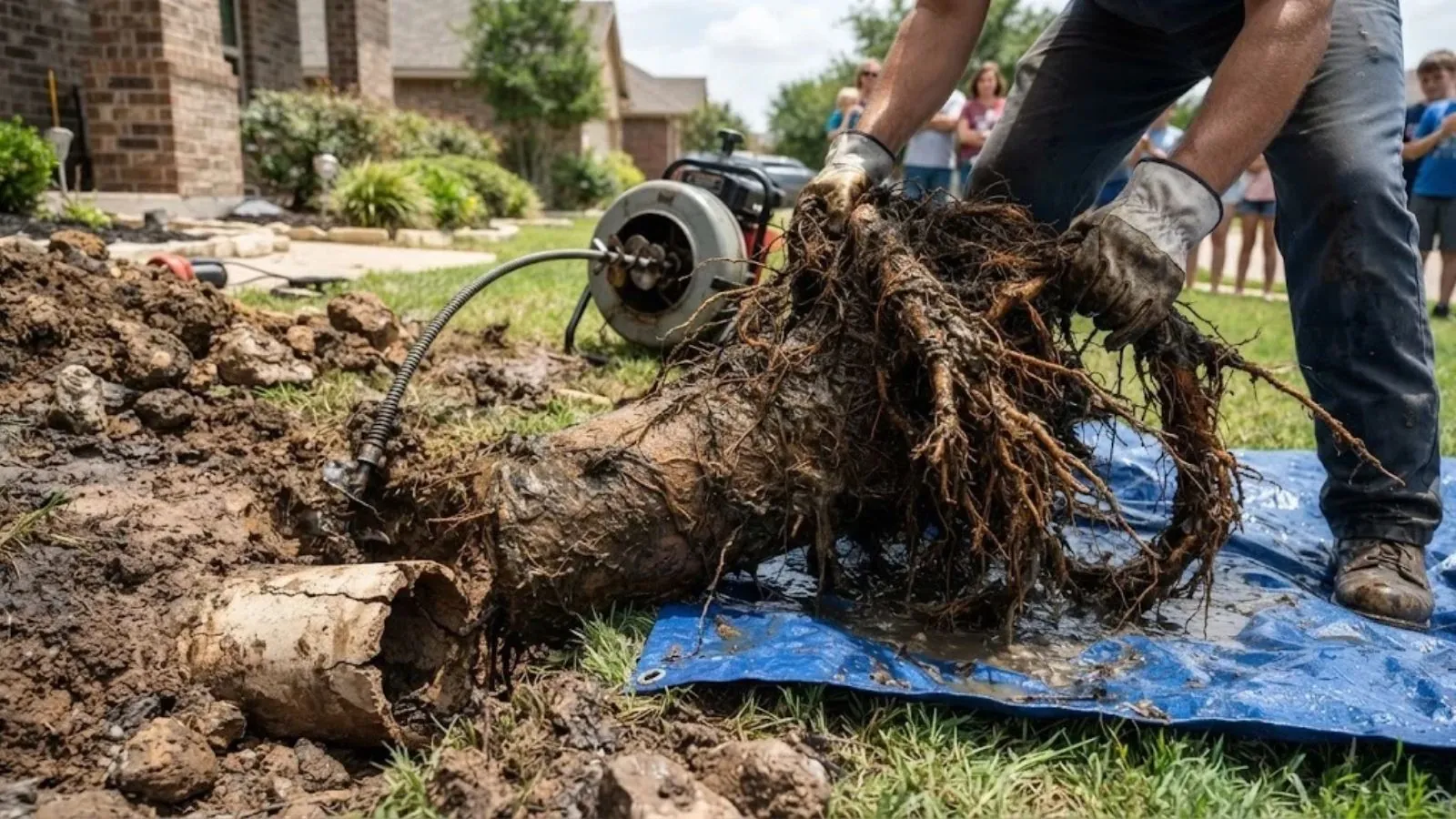
Why roots find sewer lines
Denton sits in the Cross Timbers, where post oaks and other native hardwoods grow alongside planted pecans, cedar elms and other shade trees. Their roots spread wide and search constantly for water and nutrients.
A sewer lateral carries warm, nutrient-rich water. If a joint is loose or a pipe is cracked, a little vapor and moisture escape into the surrounding soil. Fine roots follow it to the source and slip through the gap.
Once inside, a root grows into a mat of hair-like fibers that catches paper and waste. The mat thickens every season until the line slows and backs up.
Why older Denton lines are most at risk
Older laterals were often made of clay tile or cast iron in short sections. Clay tile joints were not tightly sealed, and cast iron corrodes and cracks over time. Both give roots easy entry.
Denton's expansive clay makes it worse. As the soil swells and shrinks, it pulls on the joints, opening gaps a little more each year. Dry summers, when trees search hardest for water, tend to be followed by a wave of root clogs.
Modern PVC laterals with glued joints resist roots far better, which is why a single repair at the worst joint can buy many years.
Early signs of root intrusion
Roots rarely cause a sudden blockage. They build up.
- Slow drains throughout the house, not just one fixture.
- Gurgling toilets, especially when the washer drains.
- Backups that return every few months or every spring.
- A lush, green strip of lawn over the line's path.
- A sewage odor near the cleanout.
How the fixes compare
Each approach has a place. The camera decides which one fits.
| Fix | What it does | How long it lasts | Best for |
|---|---|---|---|
| Cabling (rooter). | Cuts a path through the roots. | Often months. | Emergency relief. |
| Hydro jetting. | Scours roots and debris from the pipe wall. | Usually longer than cabling. | Fine roots in sound pipe. |
| Spot repair. | Replaces the joint where roots enter. | Long-term at that spot. | One main entry point. |
| Trenchless lining. | Seals the pipe from inside. | Long-term. | Several cracked joints. |
| Replacement. | New pipe for the whole run. | Long-term. | Collapsed or badly sagging lines. |
What to do when the line backs up
Safety and damage control come first.
- Stop using water everywhere in the house.
- Keep children and pets away from any sewage.
- Do not pour chemical drain openers into a main line. They rarely reach root clogs and make the line hazardous to open.
- If neighbors on the same street are also backed up, call the City of Denton wastewater line, since the city main may be blocked.
- If only your house is affected, call a plumber to clear the line and run a camera.
Clearing the line, then deciding
The first visit usually clears the blockage and restores flow. The second step matters more: a camera inspection. It shows where roots enter, how many joints are affected and whether the pipe is cracked, separated or sagging.
If the pipe is sound with fine roots, hydro jetting scours it clean. If there is one bad joint, a spot repair ends the problem at that spot. If several joints are failing, lining or replacement makes more sense. Those options are compared on our page about repairing a damaged lateral.
New sewer pipe is laid to the minimum slopes in the 2021 International Plumbing Code (IPC), such as 1/8 inch of fall per foot for 4-inch pipe, which helps it flow freely and resist future buildup.
What a sewer camera report shows
A camera inspection records the inside of the lateral from the cleanout to the city main. The plumber should mark the distance to each problem, so you know exactly where it is.
Look for four things on the footage. Root intrusion appears as hair-like fibers at joints. Offset joints show as a step where one section no longer lines up with the next. Cracks show as dark lines, sometimes with soil visible. Bellies show as water that stays pooled in a low section.
Ask for a copy of the video. It is useful for comparing repair quotes, for planning future maintenance and for showing a buyer the line's condition if you sell.
The camera also shows the pipe material, which helps predict how the rest of the line will age. Clay tile and cast iron sections are the most likely to fail next.
Trees and sewer lines can coexist
Know where your lateral runs before you plant. It usually leaves the house near a bathroom or kitchen and heads toward the street, often passing the outdoor cleanout. A plumber can locate it with a transmitter on the camera.
You do not have to cut down a healthy tree to protect a sewer line. Fixing the entry point removes what attracts the roots. When planting new trees, keep water-seeking species well away from the known path of the lateral.
Acreage properties have longer laterals and often septic lines, which roots can invade too. Homes around Argyle with mature trees near drain fields should watch for the same warning signs.
Tree root questions
Some foaming root treatments can slow regrowth after a line is cleaned. They do not fix the crack or joint that lets roots in, so they are a maintenance step, not a repair.
Only as often as needed. If it clogs every year, the cost of repeated cleanings often exceeds a spot repair at the entry point.
A great deal. Without one, you are paying to clear a line without knowing why it clogged. With one, you know where the roots enter, whether the pipe is cracked or sagging and whether a single repair would end the problem. It often saves money by preventing a cycle of repeat cleanings or by avoiding a full replacement that was not needed.
It does not matter much for the repair. Roots from a neighbor's tree or a street tree can reach your lateral. The fix is still at your pipe.
Roots usually enter through existing gaps. As they grow, they can widen cracks and displace joints, which makes the damage worse over time.
Denton Apex Plumbing coverage map
Coverage map for Denton and the nearby Denton County towns we serve.
Need a plumber for this?
Call the 24/7 line for Denton and nearby towns. Describe what you are seeing.
Call (940) 229-7314