Water Damage Restoration in Denton, TX
A burst pipe, a failed water heater or a backed-up drain leaves standing water, wet drywall and soaked flooring behind. In Denton, TX, water damage restoration has its own 24/7 line, (833) 521-1033. It is separate from our plumbing number.
What to do right now
The first hour matters most. Do these before the restoration crew arrives.
- Stop the water. Close the main shutoff, or the valve on the fixture that failed.
- Switch off power to wet rooms at the breaker if you can reach the panel safely.
- Photograph and video everything before moving anything. Insurers ask for it.
- Move furniture, rugs, electronics and papers out of the wet area.
- Call your insurer to open a claim, and call the restoration line.
Water still coming from a broken pipe needs a plumber first. Our plumbing line handles fixing the broken pipe 24/7.
Restoration is a different job from plumbing
Water damage restoration means getting the water out, then drying, cleaning and fixing what it soaked. It means pumping out water, drying walls, floors and cabinets, and pulling out what cannot be saved.
It is a separate service from plumbing. A plumber fixes the pipe that failed. A restoration crew deals with the water that got out. That is why this page uses its own phone line, (833) 521-1033, which connects you with restoration providers serving Denton.
The two often happen together. In Denton, the usual sources are split supply lines after a hard freeze, water heaters that fail in a garage or closet, slab leaks that soak flooring and sewer backups after heavy rain.
Clean, gray or black water
The industry sorts water damage by contamination level. It decides what can be dried and what must go.
| Category | Typical source | What it means |
|---|---|---|
| Category 1, clean water. | A burst supply line or overflowing sink. | Most materials can be dried if work starts quickly. |
| Category 2, gray water. | Dishwasher or washing machine discharge. | Some contamination. Porous materials may need removal. |
| Category 3, black water. | Sewage backups and outside floodwater. | Heavily contaminated. Porous materials are usually removed. |
Clean water can turn into gray or black water if it sits, which is one more reason speed matters.
How drying works
Restoration crews following the IICRC S500 standard start by measuring. Moisture meters and thermal cameras map how far water has wicked into walls, subfloors and cabinets, which is often much further than the visible stain.
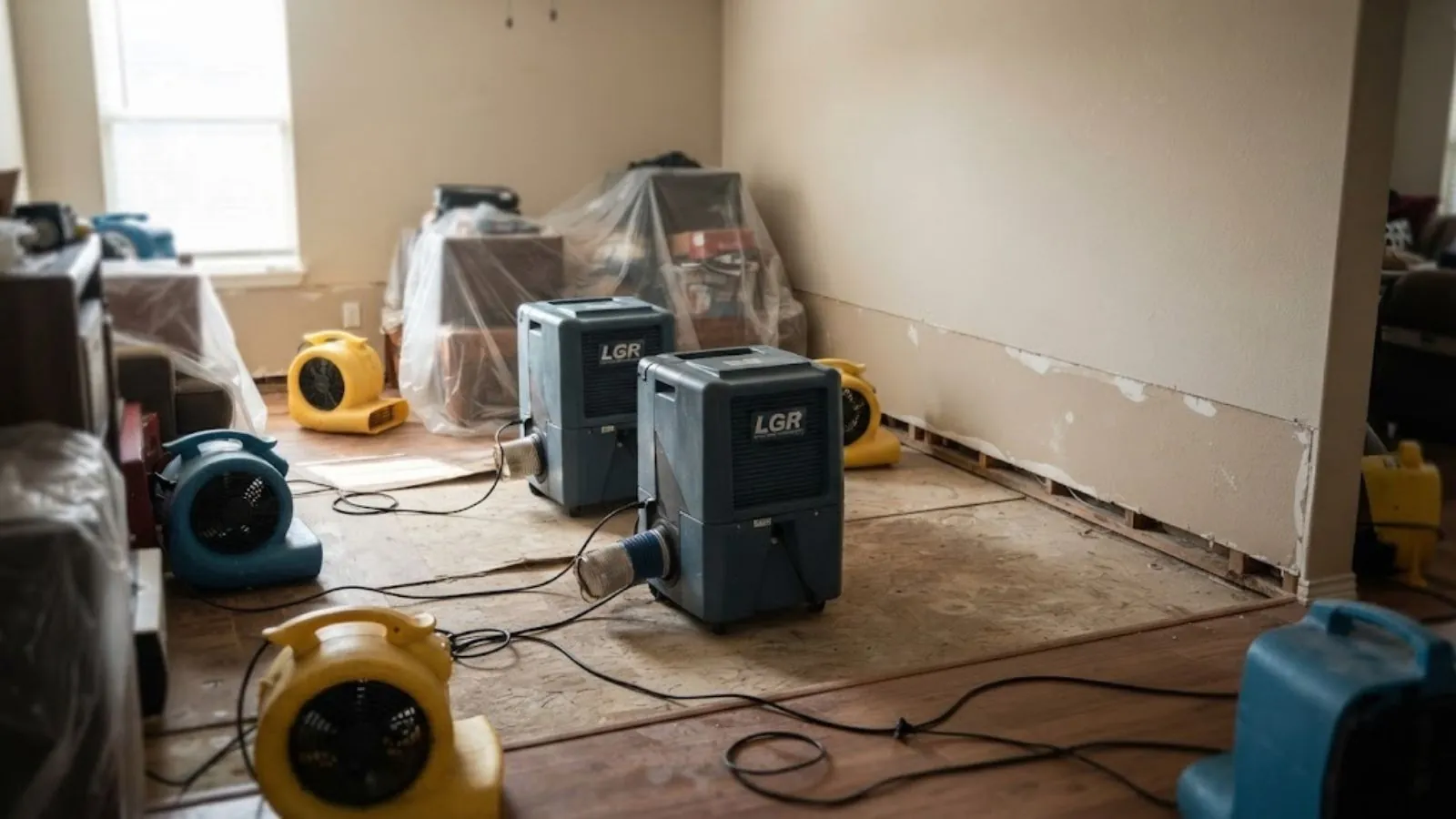
Next the crew pumps out the standing water. Then air movers and dehumidifiers are set up to pull moisture out of the structure. They check the readings each day until things are dry.
Mold becomes a risk within 24 to 48 hours in warm, damp conditions, and North Texas summers are warm. Drying promptly is the main defense. If the source was hidden, leak detection finds it so the damage does not repeat.
Working with your insurance claim
Report the loss to your insurer quickly, since most policies require prompt notice. Keep a list of damaged items with photos, and keep receipts for anything you spend to stop further damage, such as fans or a hotel stay.
The crew usually records the loss with moisture readings, photos and a daily drying log. That record helps the adjuster see what was wet, how far it spread and why materials were removed.
Ask the adjuster before any rebuild work starts. Stopping the damage is expected right away. Rebuild costs are often approved later, as a separate step.
What restoration costs depend on
Restoration pricing depends on the size and type of the loss.
- Square footage affected and how far water spread.
- Water category. Sewage cleanup costs more than clean water drying.
- Materials that must be removed, such as drywall, carpet pad or cabinets.
- Drying time and equipment needed.
- Rebuild work after drying.
Many homeowner policies cover sudden water damage, such as a burst pipe, but not gradual leaks or flooding from outside. Restoration providers often work directly with insurers.
Water damage questions
Many clean water jobs dry in about three to five days with the right equipment, but it depends on materials and how long the water sat.
Fans dry the surface. Water trapped in walls, under floors and in cabinets usually needs dehumidifiers and daily moisture checks.
No. Restoration calls use (833) 521-1033. For the pipe repair itself, use the plumbing line shown on our plumbing pages.
Yes. The restoration line covers Denton and nearby towns such as Aubrey.
Denton Apex Plumbing coverage map
Coverage map for Denton and the nearby Denton County towns we serve.
Water where it should not be?
24/7 water damage restoration line for Denton, TX: (833) 521-1033.
Call (833) 521-1033