Getting Pipes Ready for a North Texas Hard Freeze
Denton does not freeze often, which is exactly why a hard freeze does so much damage. Homes built for mild winters put water lines in attics, exterior walls and garages, which is where frozen pipes start. The February 2021 winter storm showed what happens when those lines freeze across a whole region. This checklist is about the hours before the next one.
Why North Texas homes are vulnerable
In colder climates, builders keep water lines inside heated space and bury service lines deep. In North Texas, mild winters led to different habits. Supply lines often run through attics, along exterior walls and across unheated garages.
That works nearly every winter. During a long hard freeze, especially one with power outages, those exposed lines lose heat fast. Water in the pipe freezes and expands. The split usually happens somewhere else along the line, where pressure builds between the ice and a closed faucet.
The February 2021 winter storm brought days of freezing temperatures and widespread power outages across Texas. Burst pipes were one of the most common kinds of damage afterward, because the heat that normally protects indoor lines was off.
What to do before a hard freeze
Start when the forecast calls for several hours below freezing.
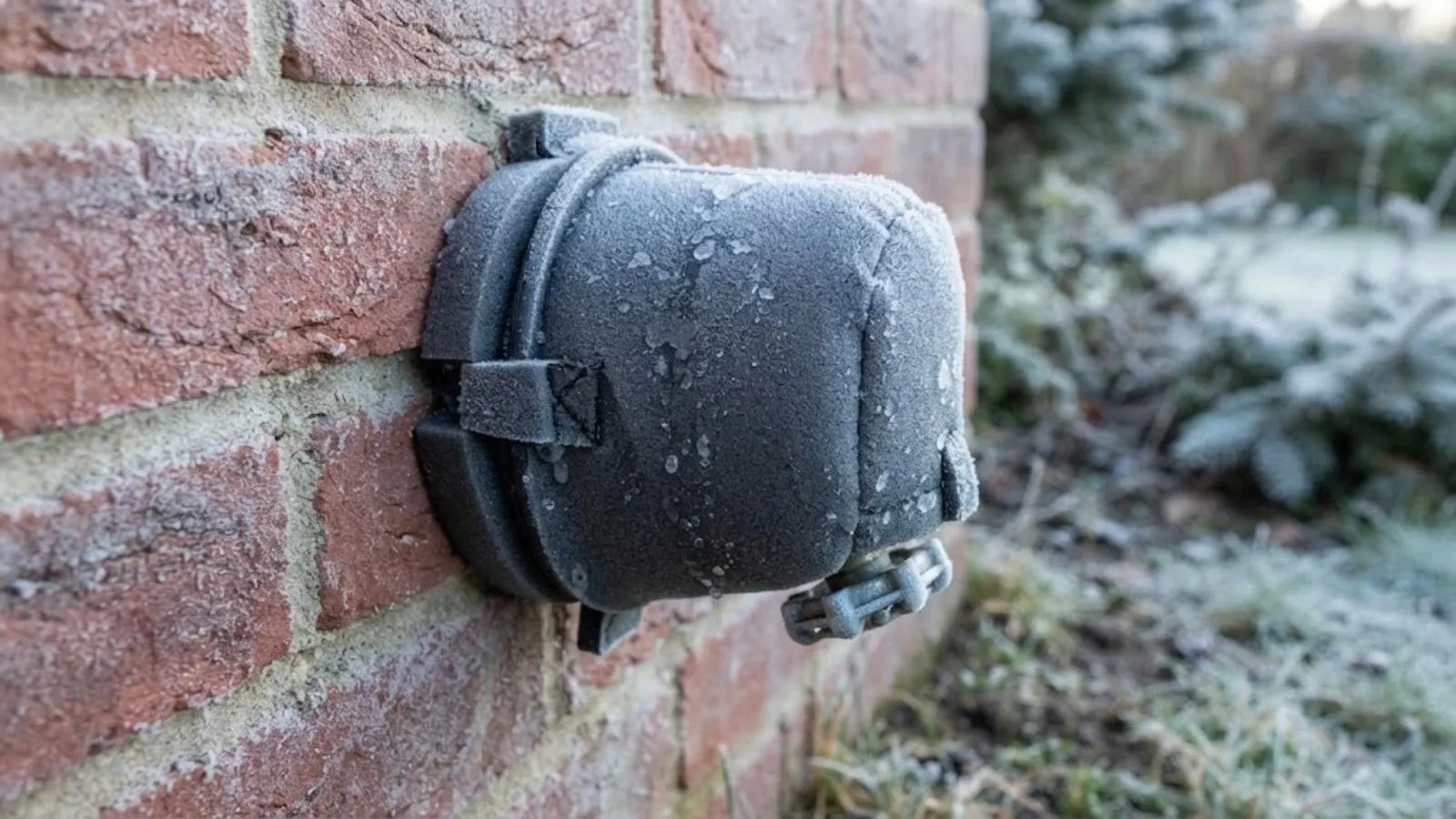
- Disconnect every garden hose from outdoor faucets and fit insulated covers over the spigots.
- Shut off and drain the irrigation system, and insulate or drain an above-ground backflow assembly.
- Open cabinet doors under sinks on exterior walls so warm room air reaches the pipes.
- Let a faucet on an exterior wall drip slowly, both hot and cold, to keep water moving.
- Keep the garage door closed if water lines or the water heater are in the garage.
- Keep the thermostat steady, day and night, rather than setting it back.
- Find the main shutoff and make sure it turns. Put a flashlight near it.
- If you will be away, leave the heat on and consider shutting off the main and draining the lines.
Where pipes freeze first
These are the spots that fail first in North Texas homes.
| Location | Risk | Quick protection |
|---|---|---|
| Attic supply lines. | High. | Pipe insulation, closed attic hatch. |
| Exterior wall lines under sinks. | High. | Open cabinets, drip the faucet. |
| Outdoor faucets. | High. | Remove hoses, add covers. |
| Garage lines and water heater. | Moderate. | Keep the garage door closed. |
| Irrigation backflow assembly. | High. | Drain or insulate it. |
| Tankless units on exterior walls. | Moderate. | Keep power on for freeze protection, or drain per the manual. |
If you lose power during a freeze
A power outage changes the plan. Without heat, indoor lines are at risk too, and built-in freeze protection on tankless units stops working.
If the outage looks long and temperatures are well below freezing, shutting off the main and draining the lines is the safest option. Open the lowest faucet in the house and an outdoor spigot to drain what you can. Drain a tankless unit according to its manual.
Never use an open flame to thaw pipes, and never run a gas oven or generator indoors for heat. Carbon monoxide is a bigger danger than a frozen pipe.
What to do if a pipe bursts
Often the leak only shows when the ice thaws. Act fast.
- Close the main shutoff immediately.
- Switch off power to wet areas if you can reach the breaker panel safely.
- Turn off the water heater, or set gas to pilot, if hot lines are involved.
- Open faucets to drain the remaining water.
- Photograph the damage and the break for insurance.
- Move belongings out of the water and call for help.
Our burst pipe repair service runs 24/7. If water has soaked walls or ceilings, drying is a separate job for the restoration team, which has its own line.
After the thaw: checking for hidden damage
Some breaks only leak once the ice melts, and some leak inside walls where you will not see them right away.
- Run the meter test once the freeze ends: all fixtures off, watch the leak indicator.
- Check the attic with a flashlight for wet insulation or drips.
- Look at ceilings and walls below attic lines and along exterior walls for new stains.
- Turn on each outdoor faucet and watch inside the wall behind it for leaks.
- Check the irrigation system zone by zone before running it on a schedule.
- Watch the next water bill for an unexplained jump.
A leak found in the first days after a freeze is far cheaper to fix than one found weeks later behind drywall.
Longer-term fixes
Take notes after every freeze: which faucet slowed first, which line burst, which room got cold. That record tells a plumber exactly where to add insulation or reroute a line before next winter.
If a line froze once, it will likely freeze again. Insulating attic and wall lines, adding a frost-free sillcock in place of a standard outdoor faucet, and adding a shutoff valve for outdoor lines all reduce the risk permanently.
Rural properties need extra attention. Lines to barns, shops and stock tanks sit in unheated space and often run long distances. Around Krum and other rural parts of the county, a separate shutoff for outbuilding lines lets you drain them before a freeze without shutting off the house.
Repairs and reroutes inside Denton follow the 2021 International Plumbing Code (IPC), which covers protecting water piping from freezing where it runs through unheated space.
Freeze questions
There is no single number. Exposed pipes in attics and exterior walls can freeze after several hours in the low 20s or below, especially with wind. Temperatures near freezing for a short time are less risky.
Both, if the faucet has separate supplies. Each line needs water moving through it.
Little or no water from a faucet during a freeze is the clearest sign. Frost on an exposed pipe is another. Keep the faucet open and warm the area gently, never with an open flame.
Usually, yes. Foam pipe insulation is inexpensive and fast to install on lines you can reach. It slows heat loss during a freeze and also keeps hot water warmer in summer. It will not protect a line through a multi-day outage with no heat, so pair it with a plan to shut off and drain the lines if the power goes out during a hard freeze.
Many policies cover sudden damage from a burst pipe, though some exclude it if the home was left unheated. Read your policy wording before winter.
Denton Apex Plumbing coverage map
Coverage map for Denton and the nearby Denton County towns we serve.
Need a plumber for this?
Call the 24/7 line for Denton and nearby towns. Describe what you are seeing.
Call (940) 229-7314