Sewage Backing Up After Heavy Rain: What to Do First
A North Texas downpour can drop a lot of rain in a short time. Sometimes the first sign of trouble is not a flooded street but a sewer backup: water rising in a shower drain or a floor drain. This guide covers what to do in the first hour, how to tell whose problem it is and how to prevent the next one.
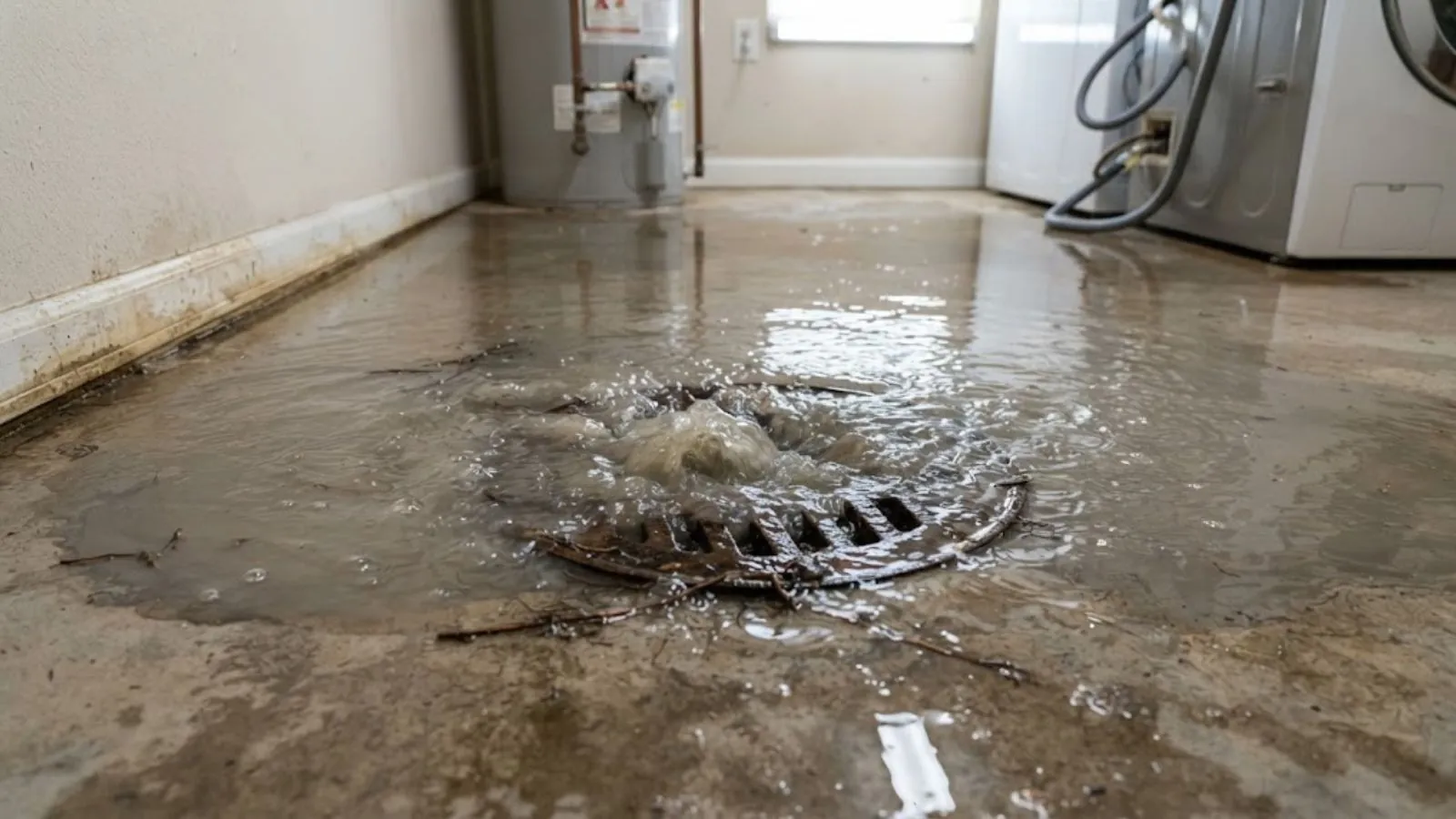
What to do in the first hour
Sewage carries bacteria. Safety and damage control come before anything else.
- Stop using water everywhere in the house: no flushing, laundry, dishwasher or showers. Every gallon has to go somewhere, and the lowest drain is where it goes.
- Keep children and pets out of the area. Wear gloves and boots if you must walk through it.
- If water is near outlets, appliances or the electrical panel, stay clear and switch off power only if you can reach the panel safely from a dry spot.
- Photograph and video everything, including the time, before any cleanup.
- Check with a neighbor or two. Whether they are backed up too tells you where the problem is.
- Call the right party: the city if the main is the issue, a plumber if it is your line.
Why heavy rain causes sewer backups
Sanitary sewers are designed to carry wastewater from homes, not rainwater. But during heavy storms, rainwater and groundwater find their way in through cracked pipes, loose manhole covers, illegal downspout connections and defective cleanout caps. Engineers call this inflow and infiltration.
When enough extra water enters the system, the main in the street can run full. Wastewater then has nowhere to go, and it backs up the laterals into the lowest drains in houses connected to that main.
Your own lateral can also be the cause. A partly blocked line, from roots, grease or a sag, may drain fine on a dry day but back up when heavy rain raises the water table and more water finds its way into the pipe.
Whose problem is it?
This quick guide helps you call the right people first.
| What you notice | Likely cause | Call first |
|---|---|---|
| Several neighbors backed up at once. | City main surcharged or blocked. | City of Denton wastewater line. |
| Only your house, only during heavy rain. | Rainwater entering your lateral, or a partial blockage. | A plumber, then a camera inspection. |
| Only your house, rain or shine. | A clog in your lateral. | A plumber. |
| Water from the cleanout cap in the yard. | Line full downstream of the cleanout. | Plumber, or the city if neighbors are affected. |
| Standing water in the yard, not sewage. | Surface drainage, not the sewer. | Neither. Look at grading and gutters. |
Cleanup: when to do it yourself and when not to
Sewage is classed as Category 3 water under the IICRC S500 restoration standard, the most contaminated category. Porous materials it soaks, such as carpet, pad, drywall and insulation, usually have to be removed rather than dried.
A small backup contained to a tile floor can sometimes be cleaned by the homeowner with gloves, boots, disinfectant and good ventilation. Anything that reached carpet, walls or a large area is usually a job for a restoration crew, both for safety and for a proper insurance record.
Restoration is a separate service from plumbing, and the drying and cleanup crew has its own line. The plumber's job is to clear the line and find out why it backed up.
Clearing the line and finding the cause
Once the city main is ruled out, the plumber clears your lateral, usually from the outdoor cleanout. A cable machine opens the line. Heavy grease or root mats may call for hydro jetting.
The more important step comes next. A sewer camera shows whether the line is cracked, separated, full of roots or sagging. A line that only backs up in storms often has a crack or open joint that lets groundwater in. Our drain cleaning page covers the clearing, and sewer line repair covers the fixes the camera may point to.
Ask for the camera video. It is useful for your insurer and for comparing repair quotes.
How to prevent the next backup
Some of these are simple. One is a real plumbing upgrade.
- Keep the cleanout cap on and intact. A broken or missing cap lets rain and debris straight into your lateral.
- Disconnect any downspout or yard drain tied into the sewer. Rainwater does not belong there.
- Fix known cracks and root entry points found on camera.
- Keep grease out of the kitchen drain, since a narrowed line backs up sooner in a storm.
- Ask about a backwater valve. It closes automatically when sewage tries to flow back toward the house. The International Plumbing Code (IPC) calls for backwater protection where fixtures sit below the next upstream sewer manhole, and many homes add one voluntarily.
Insurance: check before the next storm
Many standard homeowner policies exclude water that backs up through sewers or drains unless a specific sewer backup endorsement was added. It is usually an inexpensive add-on.
Read your policy now, not after a storm. If the endorsement is missing, ask your agent about the cost and the coverage limit.
Newer subdivisions are not immune. Homes around Aubrey and other fast-growing towns connect to newer mains, but construction debris, settling and storm inflow can still send water back up a lateral.
Sewer backup questions
Small, contained backups usually are, if the area is closed off and cleaned properly. Large backups, especially into living areas, or any backup near electrical equipment, may call for staying elsewhere until cleanup is done.
Disinfectant helps on hard surfaces after the waste is removed. It does not make soaked carpet, pad or drywall safe to keep. Those are usually removed.
It depends on the circumstances and on the city's policies. Document everything and contact the city to ask about its claims process.
After the first one, yes. It shows whether the cause was a one-time blockage or a problem that will repeat. After that, only if backups return or the cause changes.
Look for a capped pipe, often 3 or 4 inches wide, near the foundation on the side of the house closest to the street, or near the property line. Some older homes only have an indoor cleanout.
Denton Apex Plumbing coverage map
Coverage map for Denton and the nearby Denton County towns we serve.
Need a plumber for this?
Call the 24/7 line for Denton and nearby towns. Describe what you are seeing.
Call (940) 229-7314