Water Filtration Installation in Denton, TX
Tap water that tastes like a pool, smells faintly of chlorine or leaves grit in the aerator. Water filtration installation in Denton, TX starts with what is actually in your water. The fix might be one under-sink unit or a whole-house carbon filter.
Taste, smell or just not sure what is in it?
Most people call about filtration because of how the water tastes or smells, not because of a test result. Chlorine-type taste, a musty note in late summer or sediment in the aerator are common reasons.
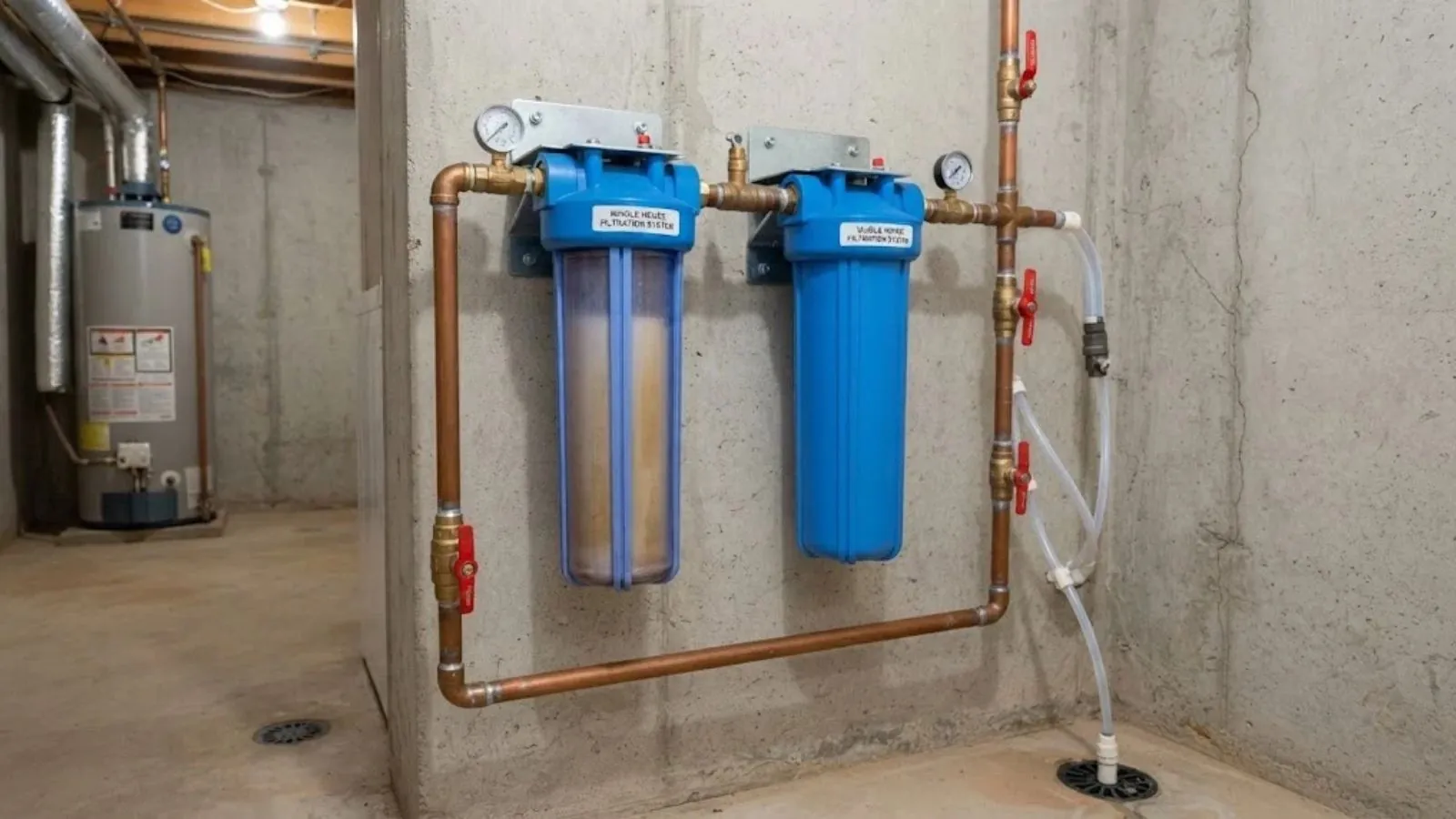
Water filtration installation means putting a filter system on your supply, either at the point where water enters the house or at a single tap. Denton treats lake water from Lewisville Lake and Ray Roberts Lake to federal drinking water standards, so filtration here is usually about taste, odor and preference rather than safety.
The City of Denton publishes an annual water quality report. Reading it, or testing your own tap, tells you which filter type actually addresses your concern.
Which filter does what
Each type targets different things. None does everything.
| System | Removes or reduces | Where it goes |
|---|---|---|
| Sediment filter. | Sand, rust flakes and grit. | Whole house, before other filters. |
| Whole-house carbon. | Chlorine taste and odor, some organics. | At the main line, often in the garage. |
| Catalytic carbon. | Chloramine, which standard carbon handles poorly. | At the main line. |
| Reverse osmosis. | Dissolved solids and many contaminants. | Under the kitchen sink, one tap. |
| Water softener. | Hardness minerals only. | At the main line. |
If scale on fixtures is the real complaint, a water softener is the right tool, not a filter.
Standards worth asking about
Filters sold for drinking water are commonly certified to NSF/ANSI standards. NSF/ANSI 42 covers taste and smell, such as chlorine. NSF/ANSI 58 covers reverse osmosis. Asking which standard a product is certified to tells you what it has been tested to do.
Installation inside Denton city limits follows the 2021 International Plumbing Code (IPC). Reverse osmosis drain lines need a proper air gap so waste water cannot be drawn back into the unit.
A whole-house system also reduces pressure slightly as cartridges load up. If pressure drops noticeably, the cartridge is due, or the system was undersized. Pressure problems elsewhere may point to aging supply pipe instead.
What to do before choosing a filter
A good install follows a short process.
- Name the problem: taste, smell, grit or one thing you tested for.
- Review the city water report or test the tap.
- Choose whole-house, point-of-use or both, and size for household flow.
- Install with a bypass valve and shutoffs so cartridges can be changed without draining the house.
- Set a cartridge replacement schedule, since spent filters stop working and can restrict flow.
Private wells on the edges of the county
Homes outside city water service, including some rural properties around Krum, Ponder and Aubrey, draw from private wells. Public water reports do not apply to them, so filtration has to start with a lab test of the well water itself.
Well water can carry iron, sulfur odor, sediment or bacteria that city water does not. Each needs its own treatment step, and the order of equipment matters.
The Texas A&M AgriLife Extension runs well water screening programs in many counties. A screening is a low-cost first step before buying equipment.
Once the results are back, the plumber can match equipment to the actual problem, whether that is a sediment filter, an iron filter or a disinfection step.
What filtration costs depend on
These factors decide the price.
- System type and capacity.
- Whole-house versus a single tap.
- New piping loop and bypass at the main line.
- Cartridge replacement schedule and cost over time.
Ask about the yearly cartridge cost before choosing a system. It adds up.
Water filtration questions
Not for safety in most cases. Filters are mainly for taste, odor and personal preference, or for specific concerns you have tested for.
It depends on the system and your use. Sediment and carbon cartridges are often changed every few months to a year. RO membranes last longer. Follow the manufacturer's schedule.
Yes. A common setup is sediment filter, then softener, then carbon filter, with RO at the kitchen tap.
Yes, including homes on city water or wells around Krum. Well water needs its own testing first.
Denton Apex Plumbing coverage map
Coverage map for Denton and the nearby Denton County towns we serve.
Want better-tasting water?
Water filtration installation across Denton, TX, matched to what is in your water.
Call (940) 229-7314