Water Mitigation in Denton, TX
Mitigation is what happens in the first hours after water gets loose: stopping it, pulling it out and drying before damage spreads. Water mitigation in Denton, TX runs on a dedicated 24/7 line, (833) 521-1033, separate from our plumbing number.
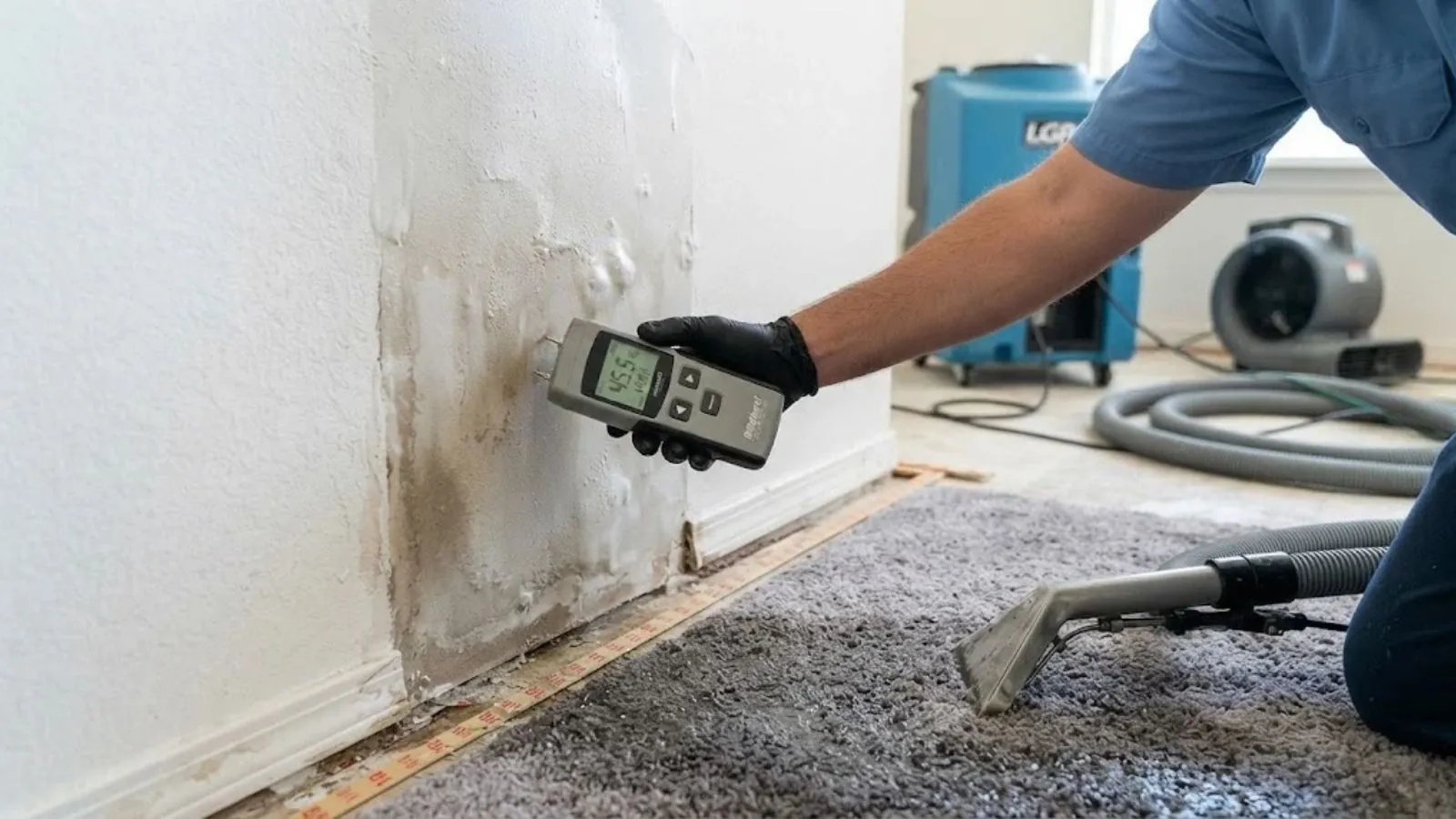
Mitigation versus restoration
Water mitigation is the emergency phase of water damage work. Its goal is to limit how much damage happens by removing water and drying the structure quickly. Restoration is the phase that follows, repairing and rebuilding what could not be saved.
In a Denton home, that usually means the first visit happens the same day as the leak, and restoration follows once everything reads dry. Insurers treat the two as separate steps, and most policies expect homeowners to take reasonable action to prevent further damage. Prompt mitigation is that action. Photos, moisture readings and drying logs from the mitigation crew also support the claim.
The full process, including rebuild, is described on our water damage restoration page.
What a mitigation crew does first
A typical first visit follows this order.
- Confirm the water source is stopped, or call a plumber to stop it.
- Check for electrical hazards and contamination level.
- Map moisture with meters and thermal imaging to find the full wet area.
- Extract standing water from floors and carpet.
- Remove materials that cannot be dried, such as soaked carpet pad or swollen baseboards.
- Set air movers and dehumidifiers, then record starting moisture readings.
Common sources of water damage in Denton homes
Knowing the source helps predict what the crew will find.
| Source | What gets wet | Plumbing fix |
|---|---|---|
| Water heater failure in a garage or closet. | Garage walls, closet flooring, nearby rooms. | Water heater replacement. |
| Split supply line after a freeze. | Ceilings, walls, insulation. | Burst pipe repair. |
| Slab leak. | Flooring, baseboards, cabinets. | Slab leak repair. |
| Sewer backup. | Floors and anything the water touched. | Drain or sewer line work. |
Finding the pipe is a plumbing job. See slab leak repair if the water came up through the floor.
Why the first 24 to 48 hours matter
Mold can start growing on damp materials within 24 to 48 hours, especially in warm conditions. North Texas homes run warm much of the year, which shortens that window.
Water also moves. It wicks up drywall, spreads under flooring and soaks into cabinet bases. What looks like a wet spot in the kitchen can reach the next room by the next morning.
Professional crews follow the IICRC S500 standard for water damage restoration, which sets out how to assess, extract and dry. Daily moisture readings show when drying is actually finished, not just when surfaces feel dry.
What you can do before the crew arrives
Stop the source if it is safe to do so. Close the main shutoff or the valve on the failed fixture, and switch off power to wet rooms at the breaker if you can reach it without standing in water.
Lift furniture legs onto foil or blocks so wood does not wick water. Move rugs, electronics, photos and papers to a dry room.
Do not use a household vacuum on standing water, and stay out of rooms where ceilings are sagging from the weight of water above them.
If the water came from a sewer backup, keep children and pets out of the area entirely and leave cleanup to the crew.
Keep a simple log of what you see: when the water started, where it came from and which rooms it reached. It helps both the crew and your insurer.
Open interior doors between wet and dry rooms only if the crew asks. Moving humid air into dry rooms can spread the problem, so the drying plan usually controls airflow room by room.
What mitigation costs depend on
Mitigation is billed on the size and type of the loss.
- Area affected and water category.
- Amount of material removed.
- Number of drying days and pieces of equipment.
- After-hours response.
Many insurers pay for mitigation on a covered sudden loss. Ask your insurer early.
Water mitigation questions
For a covered sudden loss, such as a burst pipe, mitigation is commonly covered. Gradual leaks and outside flooding are often excluded. Check your policy.
As soon as the source is stopped. Every hour lets water spread further and raises the risk of mold.
If a pipe, fixture or water heater caused the damage, yes. The plumber fixes the source while the mitigation crew handles the water.
Yes. The mitigation line covers Denton and nearby towns such as Krum.
Denton Apex Plumbing coverage map
Coverage map for Denton and the nearby Denton County towns we serve.
Stop the water from spreading.
24/7 water mitigation line for Denton, TX: (833) 521-1033.
Call (833) 521-1033